



Is Maintenance on GLP-1 a Lie?
A 2026 post hoc analysis of the three-year SURMOUNT-1 data documented clinically meaningful weight regain in a subset of people who were still taking tirzepatide and were considered treatment-adherent. [1] I’m seeing versions of this in the wild as an advocate too. People who are still on treatment tell me the medication feels different, food noise is getting louder, hunger is changing, or weight that had been stable is starting to come back. I want to separate those two things clearly because one is published trial data and the other is what patients tell me every week, but neither tells us why this is happening, though I have my suspicions. Let’s talk about it.
There Is No Spoon - Part 1
In Part 1, There Is No Spoon, I talked about what I’ve been seeing in years four and five of GLP-1 treatment personally but also with others in my community: the medication can start to feel different, food noise can creep back in, hunger can change, and some people begin regaining even though they are still on treatment.
I discuss that scene in The Matrix where Neo finally realizes he is The One, raises his hand, and the bullets stop in midair and drop. He doesn’t dodge them or suddenly become better at avoiding them. He simply doesn’t have to fight them anymore. That is still the closest description I have for what GLP-1 treatment did to my food noise. The over-processed and hyper-palatable foods that had once felt like bullets coming at me were suddenly lying on the floor, and I wasn’t using willpower to keep them there. Go read Part 1 first, then come back here, because in Part 2 we’re digging into what the science actually says, what it still doesn’t explain, and what happens when some of those bullets start moving again.
Uh-Uh, I’m not buying it
What I’m having a hard time accepting is the idea that someone can spend years treating obesity while staying on GLP-1 to maintain the loss, change how they eat, stay on treatment, and then start regaining because they somehow “forgot” how to do all “the right things” and slipped off the non-existent wagon.
Really? 3 years later? Uh-Uh. I’m not buying it. I also want to be really clear that I am not a GLP-1 naysayer. I am an avid supporter of these treatments. I’ve spent years talking about what they can do for people living with obesity, and I have seen how profoundly they can change people’s lives, including my own. Asking harder questions about what happens after three, four, or five years is part of taking these treatments seriously and serving my community.
We’ve Seen What Happens When Nuance Gets Lost
One reason I want us asking these questions now is because of the Women’s Health Initiative mishap. We have already seen what can happen when the science is “complicated” because women’s hormones are “unpredictable” and the message that reaches patients becomes overly simplified.
Then
When the estrogen-plus-progestin arm of WHI was stopped in 2002, the findings changed the way doctors and patients thought about hormone therapy very quickly, and prescribing dropped dramatically in the years that followed. The women in the hormone therapy trials were around 63 years old on average, and over time we developed a much more nuanced understanding of how age, timing since menopause, individual risk, and the reason someone is using hormone therapy affect that conversation. [3][4]
Now
At this point, decades of women have gone untreated and likely suffered needlessly in not receiving hormone replacement therapy. In its 2024 review of the WHI randomized trials, JAMA concluded that hormone therapy remains effective for moderate to severe menopausal symptoms, while the risks and benefits depend heavily on who is being treated and why. In 2026, the FDA approved removing the SCARY black lable warning on several menopausal hormone therapy products that removed cardiovascular disease, breast cancer and probable dementia statements from the boxed warning. [3][5]
Let’s not repeat history
The common statement that “obesity is complicated” cannot become a period at the end of the sentence and used as an excuse of why we “just don’t really know yet”. Of course it’s complicated. Hello! I don’t need obesity to be simple to treat (though I’d love that!), but I do want us to figure out which pieces of that complexity matter most for treatment, for which patients, and when. “We don’t know yet” is a perfectly legitimate answer in science as long as the next sentence is some version of, “Here is what we’re doing to find out.”
If You Want Lifelong Trust, Earn It
That question is also inseparable from trust. When I interviewed Tigress Osborn, Executive Director of NAAFA, we talked about what it means to ask people in larger bodies to trust medical systems that have not always treated them well. During that conversation, I said something we had talked about before the interview: we are asking people to trust systems that have also profited from our fatness, and Tigress agreed. [9] That is a pretty enormous thing to ask people to set aside when medicine comes along and says, trust us, this treatment may need to be part of your life forever.
Fen-Phen sits in that history, along with decades of weight stigma in healthcare, treatments that overpromised, and patients being blamed when those treatments failed them. Better obesity treatments have changed a lot, and I’m grateful for that, but better treatments do not erase the history patients are carrying when we ask them to trust medicine again. For many people living in larger bodies, the skepticism did not come out of nowhere.
So when we tell people obesity is a chronic disease and treatment may be lifelong, I think medicine has to understand the size of what it is asking patients to trust. If treatment may be lifelong, our commitment to understanding what happens to people on that treatment should be lifelong too. Celebrate the successes, absolutely, but when a group of patients starts having a different experience, I want us leaning toward them with curiosity instead of moving on because the average still looks good.
Okay, But Where Are They Now?

This is where my Gen X brain went straight to VH1’s old Where Are They Now? If you are of a certain age, you probably remember the format: they would find the singer, actor or one-hit wonder we knew years earlier and come back to ask the obvious question. We know what happened then, so what happened next? Apparently my brain has decided obesity research needs the VH1 treatment.
We have celebrated the year-one GLP-1 results, and now we have year-two and year-three data. The SELECT trial gives us semaglutide data extending out to four years in adults with overweight or obesity and established cardiovascular disease without diabetes, and average weight reduction remained meaningful over that period. [2] That is genuinely encouraging because it tells us these medications can continue producing substantial benefit over several years, but every one of those graphs eventually ends while the people on them keep living. I want the next episode. Where are they now?
And I don’t just mean the people who regained. SELECT included people across a huge range of body sizes, with baseline weights reaching 240 kilograms, about 529 pounds, in the semaglutide group. [6] What does treatment look like five or ten years later for someone who entered at 350, 400 or 500 pounds? Are they still maintaining? Are some beginning to regain? Does how long they lived with obesity, how severe it was, or how much weight they needed to lose change what happens years later? Those are very different treatment journeys, and I want to know whether treating them as one average is hiding something important.
The 8% I Can’t Ignore
Now let’s go back to the 2026 SURMOUNT-1 analysis, because this is the part that made me sit up. Researchers looked at 690 treatment-adherent participants with obesity or overweight and prediabetes who had already lost at least 5% of their starting weight. By week 176, most had very limited regain, which is great news, but about 8% had regained at least 10% of their pretreatment body weight from their lowest weight while they were still receiving tirzepatide. That was 57 people, and the researchers specifically called for more work to understand differences in long-term weight trajectories during treatment. [1]
And the second I saw that number, I wanted to know who those people were. Had they lived with obesity longer than the people who maintained? Was their disease more severe? Had they lost more weight initially, or spent decades cycling through loss and regain? Did hunger or food noise start changing before the scale did? Were age, menopause, sleep, body composition, or metabolic health part of the picture? Some of those questions come from what I hear from patients every week rather than from anything this particular study proved, but that is exactly the point. These are questions patients are already living with, while the research is still catching up.
Eight percent is not most people, and I don’t want to write about it as though it is. The fact that most people maintained is important and reassuring, but it does not make me less interested in the people who didn’t. If a subgroup is having a clinically meaningful difference in response while still receiving treatment, I want to understand what separates their trajectory from everyone else’s.
We also have decades of evidence telling us that the body does not simply shrug after substantial weight reduction. In a 2011 New England Journal of Medicine study, Sumithran and colleagues found that changes in several hormones involved in appetite regulation persisted a year after diet-induced weight reduction, alongside increased hunger. [7] That study was not about GLP-1 medications and cannot explain what is happening to someone five years into treatment, but it does reinforce something obesity medicine has been telling us for years: regain has biology behind it. That makes me even less willing to accept an explanation that begins and ends with the patient somehow failing maintenance.
What If How Long You’ve Had Obesity Matters?
This is where bariatric surgery started making me curious. In a large 2018 JAMA study following people after Roux-en-Y gastric bypass, participants reached their lowest weight a median of about two years after surgery. Regain was greatest during the first year after reaching that low point and continued over the following years. [8] Surgery and GLP-1 medications are different treatments, so I am not trying to lay one timeline on top of the other and call it proof, but when another powerful obesity treatment shows a pattern of major early response followed by regain in some patients several years later, yes, I pay attention.
Obesity doctors I’ve interviewed have also told me they sometimes see people become harder to treat over time, particularly patients who have lived with severe obesity for decades, have much larger amounts of weight to lose, or have cycled repeatedly through loss and regain. That is clinical observation, and it matters! It’s a data point we should value. Still, if someone has lived with severe obesity for 30 or 40 years before receiving truly effective treatment, why wouldn’t we at least ask whether that history affects what happens next?
This is where my brain keeps going to cancer. We would never talk about someone diagnosed early and someone who came into treatment with much more advanced disease as though those were exactly the same starting point, because clinicians look at how far disease has progressed, what treatment has already been tried, and what happened next. So could obesity have its own version of that question? I don’t know whether disease duration will turn out to matter a lot, a little, or nearly as much as I suspect it might, and I’m perfectly comfortable saying that. What I’m less comfortable with is acting like the question isn’t worth answering.
And if duration or severity does matter, even a little, then I start thinking differently about timing. At the Obesity Action Coalition’s Your Weight Matters conference, I listened to children and teenagers already living with obesity while we continue to have this massive debate about whether treating young people is too aggressive. What happens on the other side of that decision if obesity progresses for some people and we wait until they reach adulthood with more severe disease, more complications, and years of weight cycling behind them?
The same question applies to an adult who has lived with obesity for ten years and may have another 30 years ahead of them. If earlier effective treatment changes the trajectory, I would really like us to know that before another generation spends decades waiting. Don’t you?
What Does Lifelong Treatment Actually Mean?
That same conference gave me another way to think about what we mean by “lifelong treatment.” Joe Nadglowski, President and CEO of the Obesity Action Coalition, stood in front of the room and essentially told us not to let his body size fool us. If you saw Joe and knew nothing about his history, you might never guess how much obesity treatment sat behind the body you were looking at, and I had to catch my own bias in real time.
Then Joe said he was on his seventh medication to treat obesity.
Seventh, y’all! Let that sit with you.
By the end of the conference, I realized his story was not unusual in that room. People living in bodies many of us might look at and assume were average or small talked about years of obesity, bariatric surgery, medication, regain, and more treatment. You could not see that history by looking at them because what I was actually seeing were people treating the hell out of a chronic disease.
That made “lifelong treatment” feel much more real to me, but it had me asking, for how long will it stay managed?
Maybe lifelong treatment does not always mean finding one medication, reaching a maintenance dose, and staying there happily ever after. For some people it may mean switching medications, combining treatments, having bariatric surgery and later adding medication, or eventually using therapies that do not exist yet. We talk a lot about whether patients will stay on obesity treatment for life, but I think we also need to understand what treating obesity across a life actually looks like.
So What Do We Do Right Now?
While we wait for better answers, there are absolutely things patients and clinicians should look at when treatment starts to feel different. I am all for looking at sleep, other medications, hormones and menopause, nutrition, physical activity, body composition, and other medical conditions because those things can affect obesity treatment, and sometimes one of them will give us something useful to change. That is part of good care, and I am not dismissing it.
Where I get frustrated is when that entire conversation gets handed back to the patient as a list of chores: eat more protein, lift weights, sleep better, manage your stress. Those may all be reasonable recommendations, but they do not automatically explain why a treatment that once quieted hunger and food noise so powerfully can feel different years later. If the bullets that once stopped and dropped without effort start coming again, telling someone to try harder misses the part of the story I am actually trying to understand. Maybe you are too?
Maybe sleep or menopause will explain a lot for some patients. Maybe disease duration, biological adaptation, body composition, genetics, medication exposure, or something we have not even identified yet will matter more for others. I don’t expect one neat answer because obesity really is multifactorial, but “multifactorial” should be the beginning of the investigation, not where we stop.
My Year 5 Problem
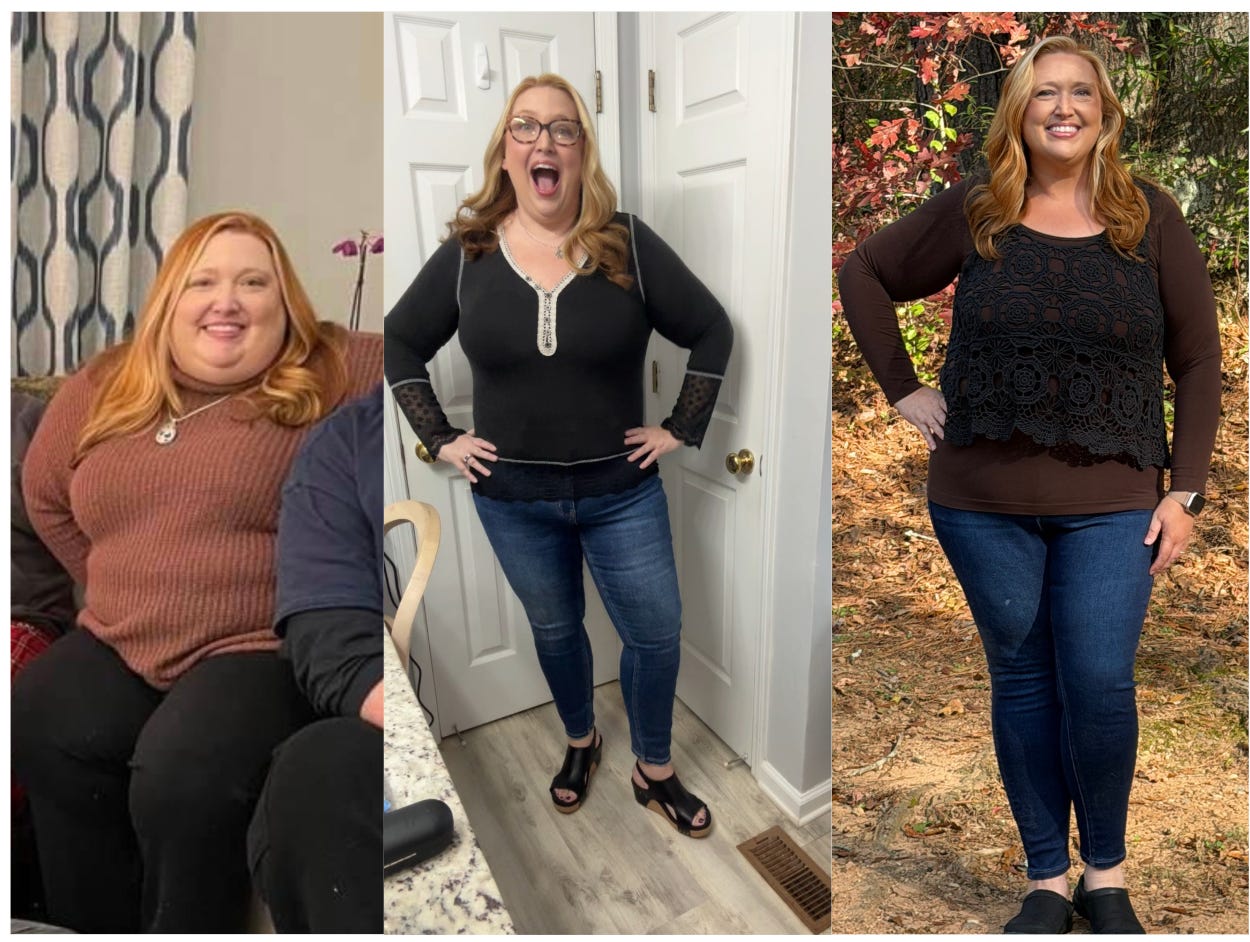
I started digging into all of this because I wanted to understand what I was seeing as an advocate, but somewhere along the way this stopped being only a question about other people. I am in year five too, and I have my own version of the medication feeling different, weight coming back, and trying to figure out which pieces of my own very complicated health picture may actually matter. That is where Part 3 goes next.
In Part 3, I’m turning the magnifying glass on my own Year 5 problem: what changed, what may be contributing, what I can influence, what I want my doctors investigating, and what treatment options I’m considering when the treatment that got me here no longer feels like enough. I’m making that one for paid subscribers because I’m going further into my own health and treatment than I usually do publicly, but I also think there is value in showing what this process actually looks like when the person asking all of these questions suddenly has to answer them for herself.
I still don’t know where all of this leads, and I’m okay with that because I’m not trying to manufacture an answer the science does not have yet. What I do know is that people already living in years four and five deserve researchers who are as curious about what happens next as they are, and they deserve something better than being told obesity is complicated and sent home with another list of things to optimize. We may eventually learn that some of the questions I’m asking here matter enormously and others barely matter at all, but that is what research is supposed to tell us.

After all of this, I am sure of one thing so far: there definitely is no spoon. The spoon is the idea that there is some treatment, behavior, or perfect set of rules that gives us full control of our weight forever. I don’t think that spoon exists, and maybe the sooner we stop pretending it does, the sooner we can start asking better questions about what long-term obesity care actually requires.
Sources
[1] Ryan DH, Lingvay I, Deanfield J, et al. “Long-term weight loss effects of semaglutide in obesity without diabetes in the SELECT trial.” Nature Medicine. 2024;30:2049–2057.
https://www.nature.com/articles/s41591-024-02996-7
[2] Jastreboff AM, le Roux CW, Stefanski A, et al. “Tirzepatide for Obesity Treatment and Diabetes Prevention.” New England Journal of Medicine. Three-year SURMOUNT-1 extension in people with obesity and prediabetes.
https://www.nejm.org/doi/full/10.1056/NEJMoa2410819
[3] Aronne LJ, Vincent RP, Klein KR, et al. “Evaluation of clinical relevance of weight nadirs and weight regain during 3 years of treatment with tirzepatide in participants with obesity or overweight and prediabetes.” Obesity Pillars. 2026;20:100333.
https://pmc.ncbi.nlm.nih.gov/articles/PMC13634289/
[4] Sumithran P, Prendergast LA, Delbridge E, et al. “Long-term persistence of hormonal adaptations to weight loss.” New England Journal of Medicine. 2011;365:1597–1604.
https://pubmed.ncbi.nlm.nih.gov/22029981/
[5] King WC, Hinerman AS, Belle SH, Wahed AS, Courcoulas AP. “Comparison of the Performance of Common Measures of Weight Regain After Bariatric Surgery for Association With Clinical Outcomes.” JAMA. 2018;320(15):1560–1569.
https://jamanetwork.com/journals/jama/fullarticle/2707460
[6] Manson JE, Crandall CJ, Rossouw JE, et al. “The Women’s Health Initiative Randomized Trials and Clinical Practice: A Review.” JAMA. 2024;331(20):1748–1760.
https://jamanetwork.com/journals/jama/article-abstract/2818206
[7] Steinkellner AR, Denison SE, Eldridge SL, et al. “A decade of postmenopausal hormone therapy prescribing in the United States: long-term effects of the Women’s Health Initiative.” Menopause. 2012;19(6):616–621.
https://pubmed.ncbi.nlm.nih.gov/22648302/
[8] The Plus SideZ Podcast. “GLP-1 Movement vs. Body Positive & Fat Liberation Movements,” with Tigress Osborn, Executive Director of NAAFA. July 2026.
[9] U.S. Food and Drug Administration. “FDA Approves Labeling Changes to Menopausal Hormone Therapy Products.” February 12, 2026.
https://www.fda.gov/news-events/press-announcements/fda-approves-labeling-changes-menopausal-hormone-therapy-products
[10] NCBI Bookshelf. SELECT trial baseline characteristics, including baseline body-weight range.
https://www.ncbi.nlm.nih.gov/books/NBK619926/table/tr8269868382084182_ch01_t15/?report=objectonly
[11] U.S. Food and Drug Administration. Historical regulatory information on fenfluramine/phentermine and the withdrawal of fenfluramine following evidence of cardiac valvular disease.
https://www.accessdata.fda.gov/drugsatfda_docs/nda/2020/212102Orig1s000MedR.pdf
Read Part 1
The GLP-1 Year 5 Problem No One is Talking About | Part 1: There Is No Spoon
https://www.ourlastshot.com/p/the-glp-1-year-5-problem-no-one-is
I don’t know how people can afford 5 years of these meds 😵💫
So helpful in all the questions you raise. This journey is so mysterious with many shared experiences AND individual responses that drop us into smaller groups of responses. I have started year 3 and in an effort to eat more Whole Foods and step away from protein drinks and other processed food have started to gain - up 4 pounds over the last month. Plus dancing with other blood work issues that are pointing to genetic issue but still tracking, staying in a calorie deficit and strength training. I don’t get it. About ready to consult a specialist that does blood work and analysis that my PCP not my telehealth medical team don’t do. I have fought weight issues all my life - my top loss is 70 lbs 28% of my body weight. I also am 76 years old and dance with what has been thought to be fibromyalgia most of my life so chronic pain is almost a daily companion. I still work as a psychotherapist because I love the work and makes me a better person and keeps my brain/mind flexible and lively.
I look forward to Part 3. Thanks for your efforts on all of our behalf’s!